
How-To
What A Roof Inspection Actually Includes In Cairns
The Roof Repair Cairns Team · Published 2026-04-16 · Updated 2026-11-06
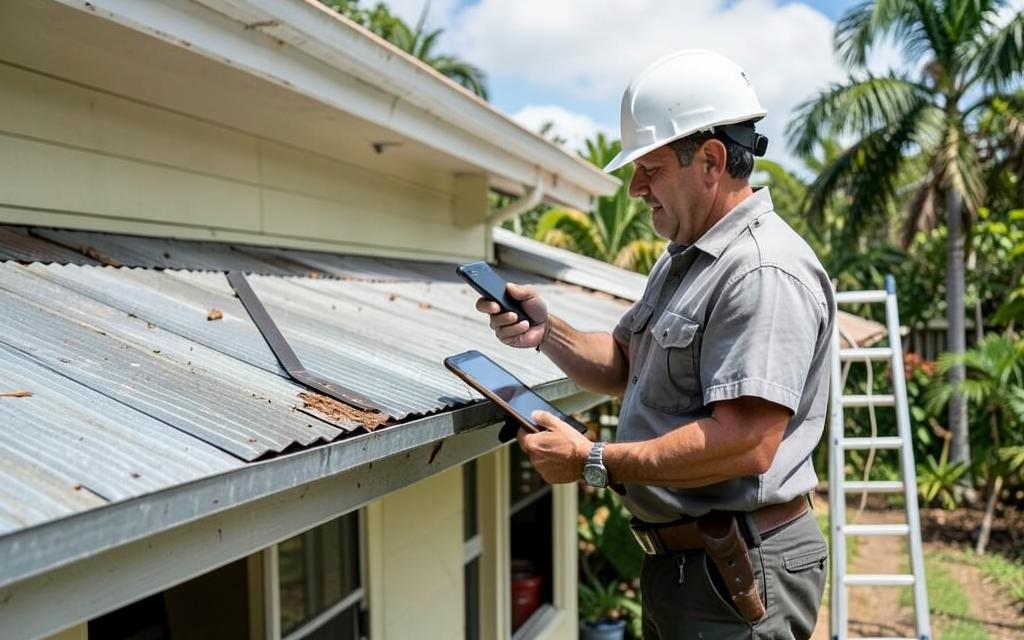
The phrase "free roof inspection" covers everything from a genuine assessment to a driveway glance and a sales pitch. So it is worth being specific about what should actually happen, and what you should have in your hands afterwards.
On the roof
- Sheeting or tiles: perforation, cracking, slipped or lifted units, coating condition.
- Fixings: a sample lifted and checked for perished washers, backed-out screws and corrosion under the head.
- Flashings and penetrations: wall abutments, aerials, solar mounts, whirlybirds, skylights.
- Valleys: corrosion, leaf-litter build-up and correct overlap.
- Ridge and hip: bedding, pointing and capping fixings.
Drainage
In Cairns this matters as much as the roof surface. We look at gutter sizing against the roof catchment, fall and sag, rust at the base of the gutter, downpipe number and capacity, rainwater heads and overflow provision. A large share of the "leaks" we are called to are drainage overwhelmed by monsoonal intensity.
Inside the roof space
Where access allows, we check the underside for daylight, active drips, historic staining, insulation damage, sarking condition and batten deterioration. Staining tells the history of a leak — which is often more informative than a single wet day.
What you receive
- Photographs of every finding, location by location.
- A plain-English explanation of the cause, not just the symptom.
- A written fixed-price quote, itemised, with options where more than one approach is legitimate.
- No call-out fee and no obligation to proceed.
We suggest a full inspection every two years in Cairns rather than every four, plus a fixings and drainage check before each cyclone season.
Before anyone climbs the roof
A thorough inspection starts with questions. Where has water shown up? Does it appear in all rain or only in wind? What work has been done before, and when? Those answers tell an inspector where to look first. A walk around the house also helps, because stains on walls, overflow marks on fascia and water pooling near footings all hint at what is happening above.
Checks that differ by roof type
The same inspection does not suit every roof. On metal, attention goes to fixings, laps and cut edges. On tile, the focus moves to ridge capping, pointing, cracked tiles and valley irons. On older tin, the inspector looks for thin sheets, loose nails and earlier patches that may be hiding faults.
- Metal: screw condition, washers, laps, rust at cut edges and coating wear.
- Tile: ridge bedding, pointing, slipped or cracked tiles and valley condition.
- Older tin: nail holes, sheet thickness, patches and sagging sections.
- All roofs: penetrations such as vents, flues, skylights and solar mounts.
Solar panels, skylights and other add-ons
Anything fixed through a roof after it was built is worth a closer look. Solar mounts, aerials, skylights and air-conditioning lines are common leak points, because each one breaks the original weatherproofing. An inspector will check the seals and flashings around them, and whether water is being blocked or diverted behind them. If panels cover part of the roof, the report should say that the area underneath could not be fully seen.
What a roof inspection cannot tell you
A good inspector is clear about limits. Parts of a roof may be hidden by insulation, ceilings, solar panels or unsafe access. An inspection shows the condition on the day, not what the next cyclone will do. It also does not replace a structural engineer's report if the frame itself is in question. Be cautious of any report that promises a roof will last a set number of years.
How to read the report
Sort the findings into three groups. First is anything letting water in now. Second is anything likely to fail in the next wet season. Third is maintenance that can be planned. This makes it easier to budget, and to compare with any quote you receive. If you are buying, ask whether the findings affect your offer or contract conditions, and do this before your finance and inspection dates pass.
How often should you inspect?
- Every two years for most Cairns homes.
- Every year for coastal homes and roofs under heavy trees.
- After any severe storm, even if nothing looks wrong.
- Before buying a property, or before major work such as solar.