
Seasonal Tips
The Cairns Wet Season Roof Checklist
The Roof Repair Cairns Team · Published 2026-01-21 · Updated 2026-11-06
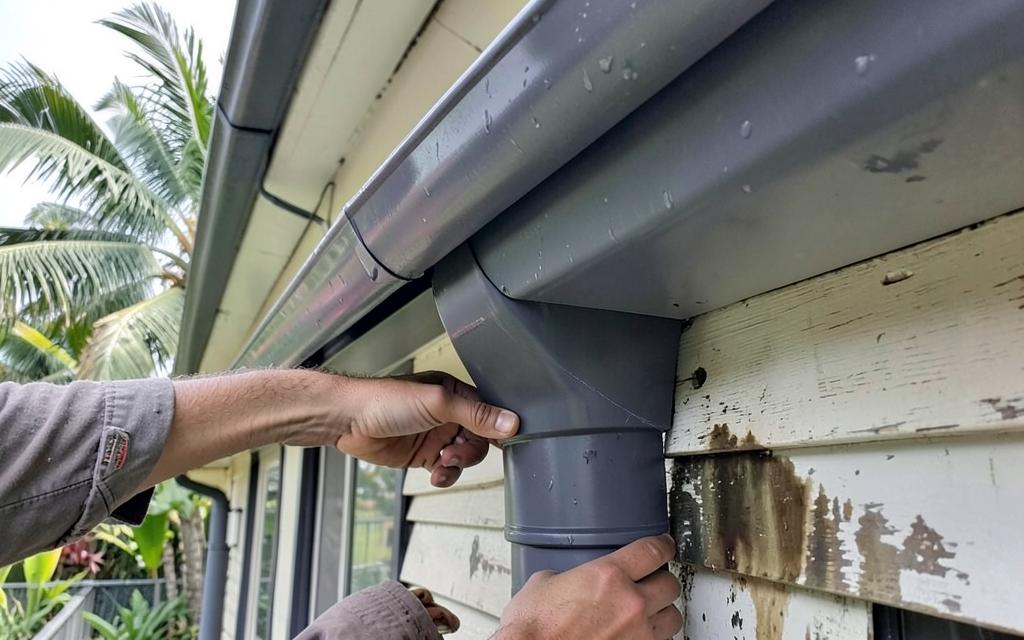
The Cairns wet season does not test whether your roof looks good. It tests capacity and connections: whether the drainage can pass monsoonal intensity, and whether the fixings and flashings can hold out wind-driven rain. A pre-season check that focuses on those two things is worth far more than a general tidy-up.
Clear gutters, valleys and downpipe outlets
Debris is the single most common cause of wet-season water entry. A blocked valley or outlet turns a normal downpour into overflow that runs back under the roof edge. Clear before the season and again mid-season if you have canopy over the roof.
Check gutter capacity, not just cleanliness
If your gutters overflow when they are clean, they are under-capacity. Look at how many downpipes serve each roof section and how large they are. Adding downpipes or rainwater heads with designed overflow is usually cheaper than the water damage from another season of overtopping.
Inspect fixings and flashing upturns
- Rust bleeding around screw heads, or screws standing proud of the sheet.
- Perished or missing rubber washers.
- Flashing upturns bent flat by wind or foot traffic.
- Split or lifted sealant beads at wall abutments and penetrations.
- Cracked pointing or loose mortar on tiled ridges and hips.
Look in the roof space
Old water staining, compressed or discoloured insulation and daylight visible at laps all tell you where water has been getting in. It is much easier to find an entry point on a dry day with a torch than in the middle of a storm with a bucket.
Trim back what overhangs the roof
Branches over the roof do three things: drop debris continuously, hold moisture against the surface, and become impact damage in a cyclone. Cutting them back before the season removes all three risks at once.
If you would rather have someone else do the climbing, the inspection is free and includes photographs of everything we find.
When to do each job
The Cairns wet season generally runs from about November to April, and the best time for roof work is before the first big rains. Trades get busier as the season starts, so a roof check in the dry months gives you more choice and more time to act on what is found.
- August to September: book an inspection and get any repairs quoted.
- October: finish repairs, and clear gutters and valleys.
- November: trim trees and tie down loose items around the yard.
- January to February: clear gutters again if you are under trees.
- After the season: check for new stains, rust and loose fixings.
Simple checks you can do from the ground
You do not need to get on the roof to spot many early warning signs. Walk around the house on a clear day, then again during steady rain if it is safe. Look for water spilling over the front of gutters, stained fascia, rust trails down walls and downpipes that are not flowing freely. Inside, look for new marks on ceilings and around cornices.
Stay off the roof yourself, especially in the wet. Roofs are slippery, older sheeting may not take your weight, and tile can crack underfoot. Falls from roofs are a serious risk, and a free inspection costs less than an accident.
Solar panels and air-conditioning units
Debris gathers under solar panels, and leaves can collect around roof-mounted units. Ask for these spots to be checked, along with their seals and fixings. If you have had solar installed recently, make sure that all penetrations were sealed properly, as any fault may only show up in the first heavy rain.
Plan for when the rain does get in
- Know where your electrical switchboard is and how to turn the power off.
- Keep a bucket, towels and a tarp handy, but do not climb up in bad weather.
- Photograph any new leak straight away, with the date.
- Keep your insurer's details and your policy number where you can find them.
- Call for help early, as trades fill up quickly after a big rain event.
After the wet season
Once the rain eases, do one last round. New rust, loose gutters and fresh stains are easier to deal with in the dry months, when repairs are not racing the weather. Keeping a simple record of each year's checks also helps with insurance and resale.