Comparison
Metal vs Tile Roofing in Cairns: Which Handles the Tropics Better?
The Roof Repair Cairns Team · Published 2026-02-18 · Updated 2026-11-06
Both metal and tile work in Cairns, and both fail in predictable ways. The useful question is not which is better in the abstract, but which performs better against the four things this climate does: extreme rainfall intensity, cyclonic uplift, relentless UV and heat, and constant humidity.
Shedding monsoonal rain
Metal wins on volume. Long continuous sheets with few joints move water fast, which matters when intensity is high. Tiles have thousands of small overlaps, and in wind-driven rain water can be forced under them, which is why tiled roofs depend heavily on sarking underneath.
Cyclone and wind uplift
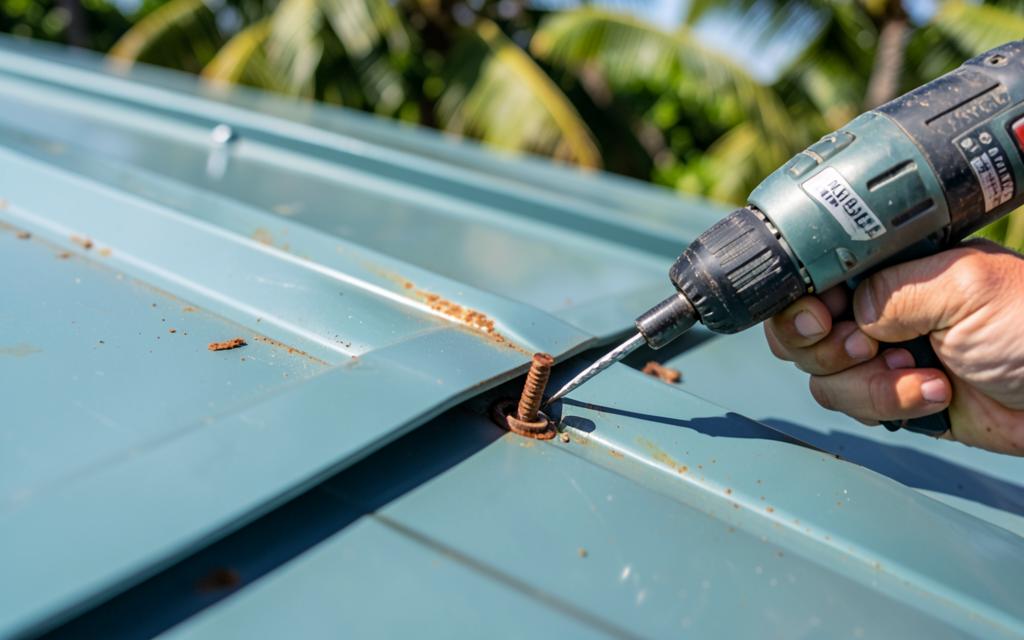
Metal performs well under uplift when the fastening pattern, battens and tie-downs are correct — the sheet is only as good as its fixings. Tiles are individually heavy but can be dislodged and become debris, and displaced tiles expose the sarking immediately.
Heat and comfort
Tiles have more thermal mass and heat up and cool down slower; metal heats fast and sheds heat fast. In practice, ceiling insulation and roof-space ventilation matter far more than the roof material, and a heat-reflective coating on metal changes the comparison substantially.
Maintenance and repairability
- Metal: fixings and cut edges corrode first; repairs are sheet, flashing and fastener replacement, and can be staged.
- Tile: ridge bedding and pointing crack, individual tiles break, sarking degrades; repairs are cheap per item but recur.
- Metal on the coast needs marine-grade fixings; without them, premature failure is guaranteed.
- Tile roofs need periodic rebedding and repointing, which is a whole-ridge job rather than a spot repair.
Which we recommend for Cairns
For most Cairns homes, correctly fixed metal roofing is the better fit for the climate — it sheds water faster, it is repairable in sections, and coating can extend its life. Tile is perfectly serviceable where it already exists and is well maintained, and replacing sound tile with metal purely for performance is rarely the best use of money.
Noise, condensation and insulation
Rain on a metal roof can be loud, especially in a Cairns downpour. Good insulation and sarking under the sheets reduce the sound a lot, and they also help with heat and condensation. In a humid climate, warm moist air can condense on the underside of a cool metal sheet, so a roof should be designed to manage that moisture. Tile is naturally quieter, but relies on its sarking and ventilation to stay dry and cool.
Weight and the house frame
Tiles are much heavier than metal sheeting. A frame built for tile will carry a lighter roof without trouble, but going the other way is different. A frame designed for metal may not be suited to tile without engineering advice. When converting from tile to metal, the batten spacing and tie-downs need checking, as a lighter roof relies more on being held down than on its own weight.
Cost over time, not just on the day
Comparing two roofs only by their installation price misses a lot. Over the life of a roof, think about how often it needs attention, how easily it can be repaired, and what happens after a storm.
- Metal: fixings and seals need checks, and coastal homes need a suitable grade.
- Tile: ridge pointing and bedding need periodic renewal, and tiles may crack underfoot.
- Both: valleys, flashings and gutters need regular attention in Cairns.
- Both: the quality of installation matters as much as the material.
Colour choice in the tropics
Lighter colours reflect more heat, and this matters on a roof that sits in strong sun for most of the year. The difference is easy to feel in upstairs rooms and in how hard the air conditioner works. If you have an existing dark roof, a reflective coating may be worth discussing, though it must suit the surface and be applied over sound material.
Which is better for each type of home?
- High-set Queenslander: metal suits both the look and the frame.
- Brick home with an existing tile roof: restoration may be better value than conversion if the tiles are sound.
- Beachfront property: either can work, but materials and fixings must suit salt exposure.
- New extension: match the existing roof, or plan the junction carefully if you do not.
If you have a tile roof that keeps needing work, get both options priced. A written comparison of restoration against conversion usually makes the decision clear.